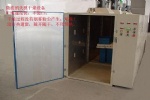
Microwave field, various polymer polar groups of microorganisms, generated intense rotation and vibration, the protein and nucleic acid mutation, thus killing the bacteria. Under normal circumstances, the mold, yeast, and general bacteria was heated to 70 ~ 80 ℃ can kill with microwave 1min can achieve the purpose of sterilization. The mold spores, such as Penicillium spores at 68 to 71 ° C after 20min the conventional sterilization in order to kill, while using a microwave at 68 to 71 ° C after 2min easy to obtain satisfactory results. Such as microwave sterilization, mildew, and preservation of the "moon cake", and achieved good results, and no longer have to import the preservative. Drying sterilization of dry sterilization of soy flour, chicken, red sweet potatoes dry sterilization are achieved good results
For more information
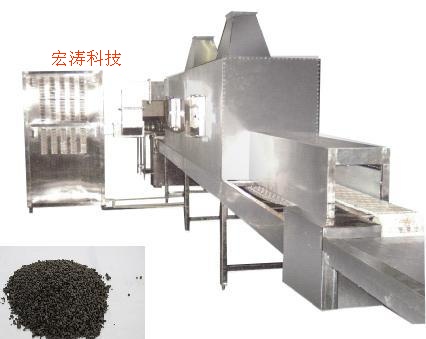
Microwave organic fertilizer drying equipment compared with conventional heating methods are very different, the traditional heating method relies on the heat source by radiation, conduction, convection, and other ways, the first heating the surface of the object, and then heat conduction, so that the internal temperature table and was gradually elevated. Most objects within the transfer of heat is very slow, such as a material in general, so as to achieve the object overall heating takes a long time. Objects likely to cause heated unevenly heated mass of the object, and even change the color, nutrients and physico-chemical properties of heated objects, has a unique way of heating and microwave heating - material overall heating, microwave heating has the following advantages: , penetrating heating, heating speed, uniform heating. Selective heating, energy efficient. 3, no thermal inertia, that have the immediacy. 4, easy to operate, it is appropriate to control. 5, environmental protection, sanitation and hygiene. 6 safe.
Main application: glass fiber, chemical raw materials, starch, cobalt oxalate, cellulose (such as hydroxyethyl cellulose, carboxymethyl cellulose and the like), mannitol, hydroxide, nickel, lithium cobalt oxide, graphite, carbon brushes, silicon carbide, dihydrate calcium chloride, activated carbon, zirconium oxychloride, zirconium oxide, zirconium hydroxide, zirconium carbonate, zirconium, n zirconium sulfate, zirconium ammonium carbonate, zirconium silicate, potassium zirconium carbonate, siccative oil ink, aqueous ink crosslinked water repellent, expandable graphite, a variety of ceramic zirconium oxide, iron oxide, a positive temperature coefficient (PTC) thermistor material dip slightly skeleton amine submerged to pharynx Qu TC components. |